PADEL
The padel racket, explained: shapes, weight and how to choose
Everything about padel rackets: the three shapes, weight and balance, materials, and how to pick the right pala for your game.
- ✓Also called a pala, a padel racquet or a padel paddle, all the same thing
- ✓Solid and stringless, with a foam core and a perforated face
- ✓Three shapes: round for control, teardrop for balance, diamond for power
- ✓Weight, balance and shape matter more than the brand on the frame
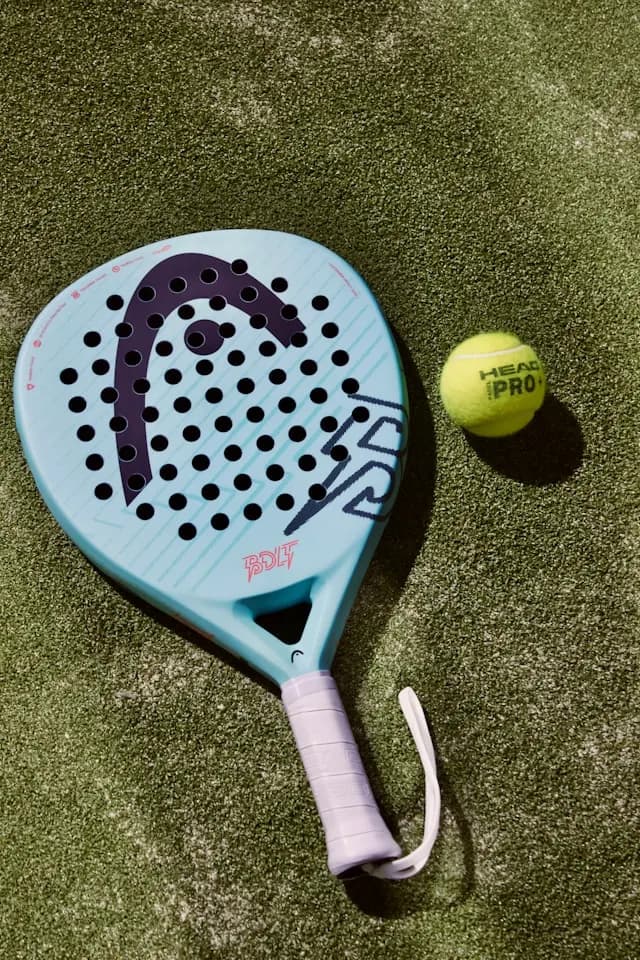
Round: control and comfort
A round racket has its sweet spot in the middle of the face and a low balance, which keeps the weight down in your hand. That makes it forgiving and easy to control, so it suits beginners and net players who value placement over power. In Spanish this is the classic pala redonda. If you are not sure where to start, a round shape is the safe, comfortable choice that will not punish an off-centre hit.
Teardrop: the all-rounder
The teardrop is the most popular racket shape because it balances control and power. The sweet spot sits a little higher than on a round frame and the balance is more even, so you get some pop without giving up much control. Most club players end up here once their game develops. It is the shape the pros reach for most often, and the one most brands build their flagship pala around.
Diamond: power for attackers
A diamond racket carries its weight up in the head, with a high sweet spot near the top of the face. That gives you serious power on smashes, but it is less forgiving and asks for solid technique, so it suits strong, aggressive players. Beginners usually find it harsh. If you love finishing points off the back glass this is the shape, but grow into it rather than starting your padel journey here.
HELP
Questions,
answered.
What is a padel racket?+
Racket, racquet, paddle or pala: which word is right?+
What racket shape should a beginner use?+
How heavy should a padel racket be?+
What are palas de padel made of?+
Is a padel racket the same as a tennis racket?+